Google Ads vs Local Services Ads for Contractors: Which One to Start With
Google Ads or Local Services Ads? How each one charges, what you control, and how a contractor can decide which to start with and when to run both.
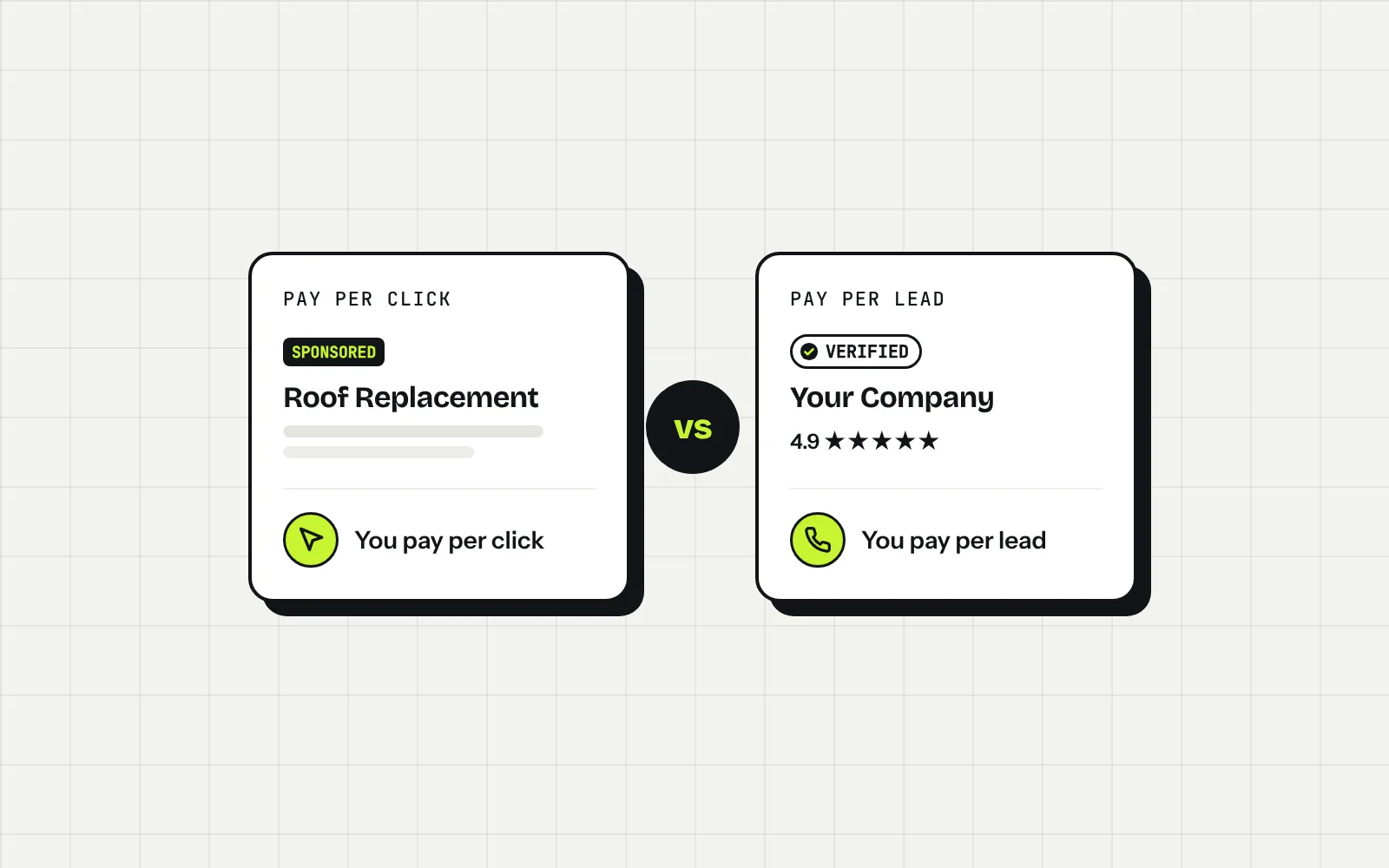
If you run a home service business and search for your own trade on Google, you’ll often see two kinds of paid results near the top. One is a set of listings with a business name, star rating and a call button, usually with a “Google Verified” check. The other looks like a normal search result with a small “Sponsored” label. The first is Local Services Ads. The second is a regular Google Ads Search campaign.
Both can bring in calls. They work very differently, and the right place to start depends on your trade, your budget and how much time you can give it. Here’s how to think about it.
How Local Services Ads Work
Local Services Ads (LSA) are pay per lead. You don’t pay when someone clicks. You pay when a customer contacts you through the ad, and Google decides what counts as a valid lead.
What Google counts as a lead:
- A phone call you answer, or a missed call during business hours where the caller stays on the line long enough
- A message or voicemail
- A booking request, where booking is available
To run LSA you have to pass Google’s verification. Depending on your trade and location, that can include background checks, proof of license and insurance, and a verified Google Business Profile. Once you pass, your ad can show the Google Verified badge, which has replaced the older Google Guaranteed and Google Screened badges. The old money back guarantee no longer applies to new jobs, so don’t promise it to customers.
What you control:
- The services and job types you want leads for
- Your service area
- Your business hours and ad schedule
- Your budget and how you bid
What you don’t control: keywords and ad copy. Google decides which searches your ad shows for, and the ad is built from your profile: name, rating, reviews, hours and services. You won’t see a list of the searches that triggered your ad.
Google ranks LSA mostly on how likely you are to win the customer. That means your review rating and count, how quickly you answer calls and messages, and how complete your profile is. Missed calls and slow replies can push you down.
How Google Ads Search Campaigns Work
A Search campaign is pay per click. You choose keywords, write the ads, pick where people land on your website and set what you’re willing to pay. You’re charged when someone clicks, whether they call or not.
What you control:
- Keywords, match types and negative keywords
- Headlines, descriptions and assets like call buttons and sitelinks
- The landing page for each group of services
- Locations, schedule, devices and bidding strategy
- The search terms report, so you can see exactly what people typed
That control is the whole point. You can go after high value jobs specifically, keep out searches you don’t want and send people to a page built to convert them. The tradeoff is that it takes more setup and more attention. A Search campaign without negative keywords and conversion tracking can waste money fast. We covered the common traps in 7 Google Ads Mistakes That Waste Contractor Budgets.
The Real Differences, Side by Side
- How you pay: LSA charges per lead. Search charges per click.
- Setup time: LSA needs verification paperwork but very little campaign building. Search needs keyword research, ad writing and landing pages.
- Control: LSA gives you a few settings. Search lets you tune almost everything.
- Visibility into searches: LSA doesn’t show you search terms. Search does.
- What drives results: for LSA, reviews and how fast you respond. For Search, keywords, ads, landing pages and bids.
- Need a website: LSA doesn’t send people to your site. Search does, so your site has to do its job.
One more thing worth knowing: Google is moving Local Services Ads into the main Google Ads platform. Accounts are being switched in stages to Performance Max campaigns with a pay per lead goal, so LSA will be managed in the same account as your Search campaigns. The basic deal stays the same: you pay for leads, and Google picks where the ad shows. If your account hasn’t moved yet, export any reports you want to keep before it does, since older reporting may not carry over.
When to Start With Local Services Ads
LSA is often the easier first step if:
- Your trade is covered. LSA is only available for certain service categories, and the list varies by country and city. Check before you plan around it.
- You have strong reviews. A solid rating and a healthy review count help a lot. If you’re light on reviews, start with how to get more Google reviews.
- Someone answers the phone. If calls go to voicemail all day, you’ll pay for leads you don’t convert and your ranking will slip.
- Your website isn’t ready. LSA doesn’t depend on your site, so it can bring in calls while you fix it.
- You don’t have time to manage a campaign. There’s less to tune week to week.
When to Start With Google Ads Search
A Search campaign usually makes more sense if:
- You want specific jobs. If you’d rather book a full roof replacement than a small repair, keywords and ad copy let you aim for that. LSA job types help, but they’re broader.
- LSA isn’t available for your trade or area. Search works for almost any business.
- You have a good landing page. A fast page with your phone number, a short form, reviews and real project photos can turn clicks into estimates.
- You want to learn what customers search for. The search terms report is one of the most useful things a contractor can read, and LSA doesn’t give it to you.
- You’re ready to track results. With call and form tracking in place, you can see cost per lead by keyword and cut what doesn’t work.
If you go this route, our step by step starter guide walks through setup.
Running Both
Many contractors end up running both, because they show up in different spots on the same results page and catch different customers. A common path looks like this:
- Start with whichever fits today. For most busy owners with good reviews and an eligible trade, that’s LSA.
- Get the basics in order. Answer calls fast, rate your leads, keep your Business Profile up to date and keep asking for reviews.
- Add a Search campaign once your website and tracking are ready. Start narrow with your highest value services and a tight negative keyword list.
- Compare cost per booked job, not cost per lead. A cheaper lead that never books isn’t cheaper.
Keep your budgets separate in your head even once both live in one account. If one channel is producing booked jobs at a better cost, move money toward it.
Final Thoughts
There isn’t one right answer for every contractor. Local Services Ads are simpler to run and reward good reviews and fast responses. Google Ads Search takes more work but gives you control over which jobs you chase and where customers land. Pick the one that fits where your business is today, track booked jobs from day one and add the other when you’re ready.
If you’d like help deciding, our Google Ads management covers both. Or request a free audit and we’ll look at your current setup and tell you where we’d start.